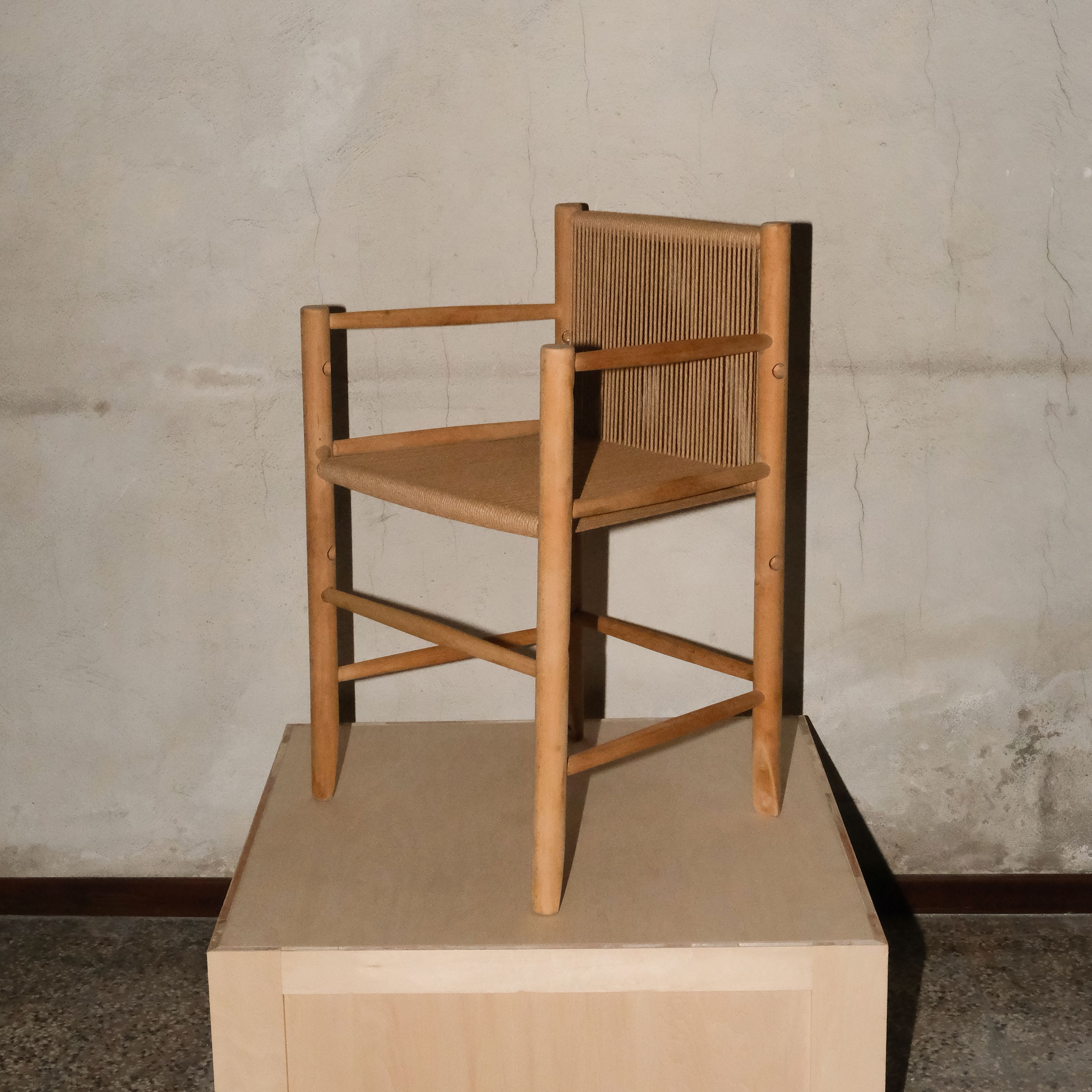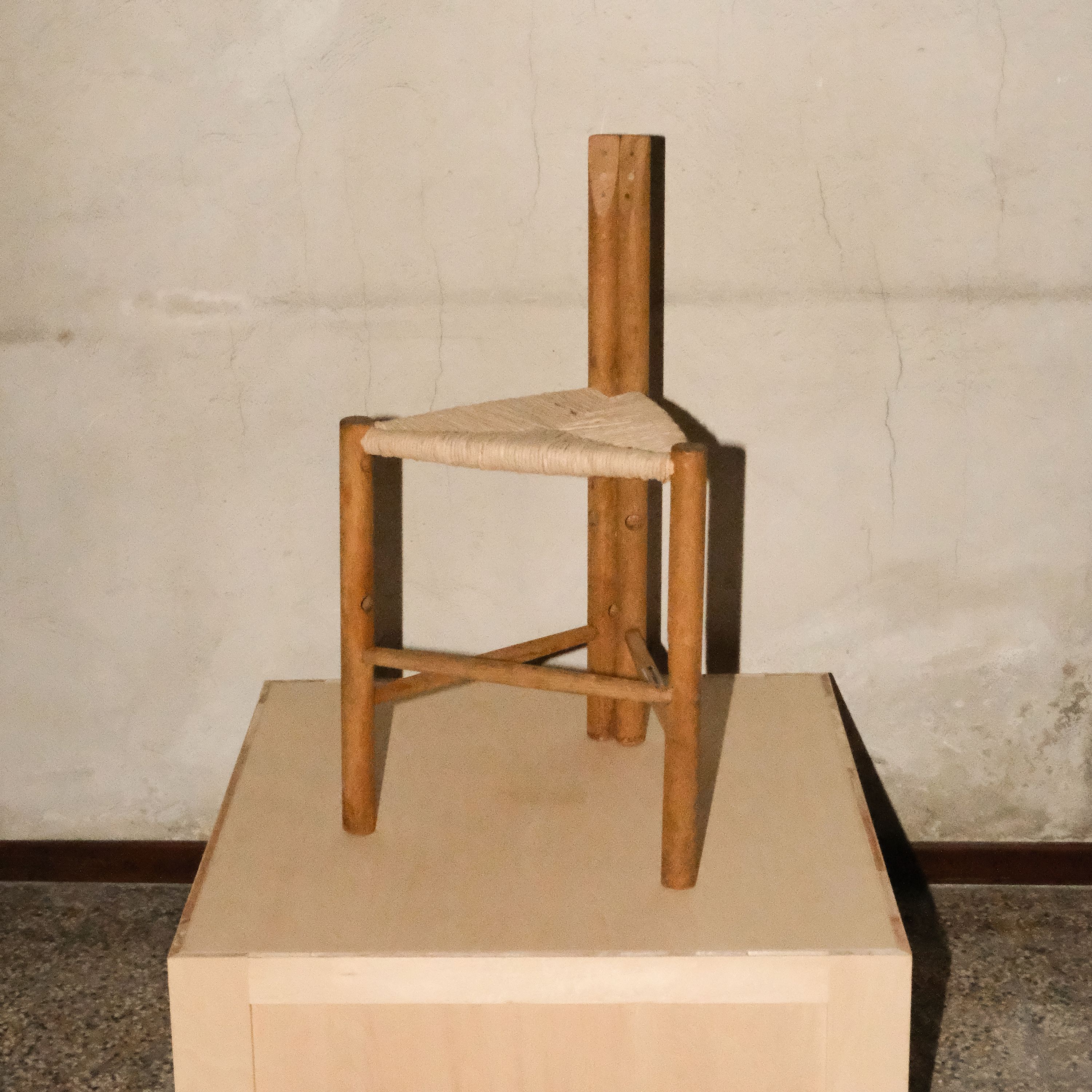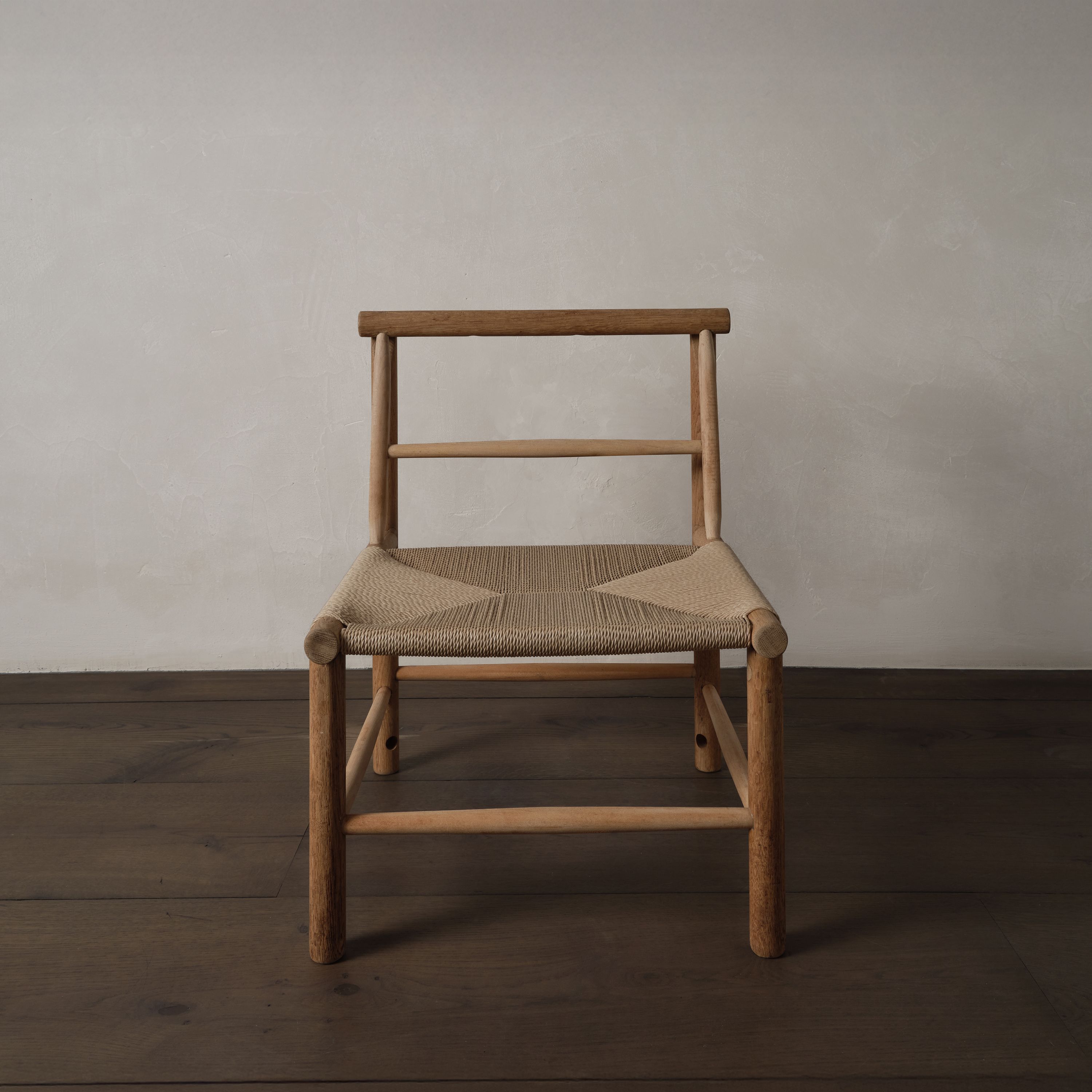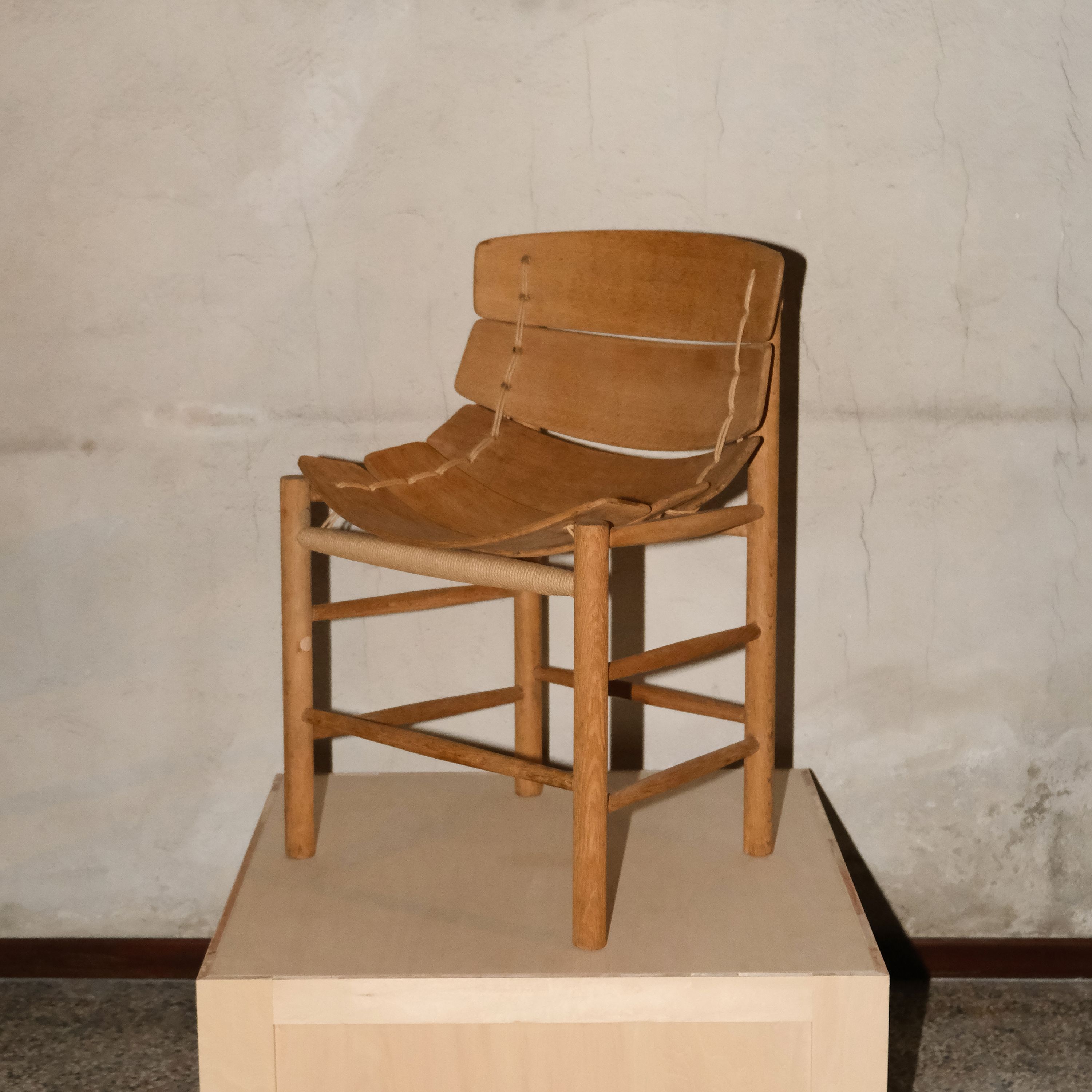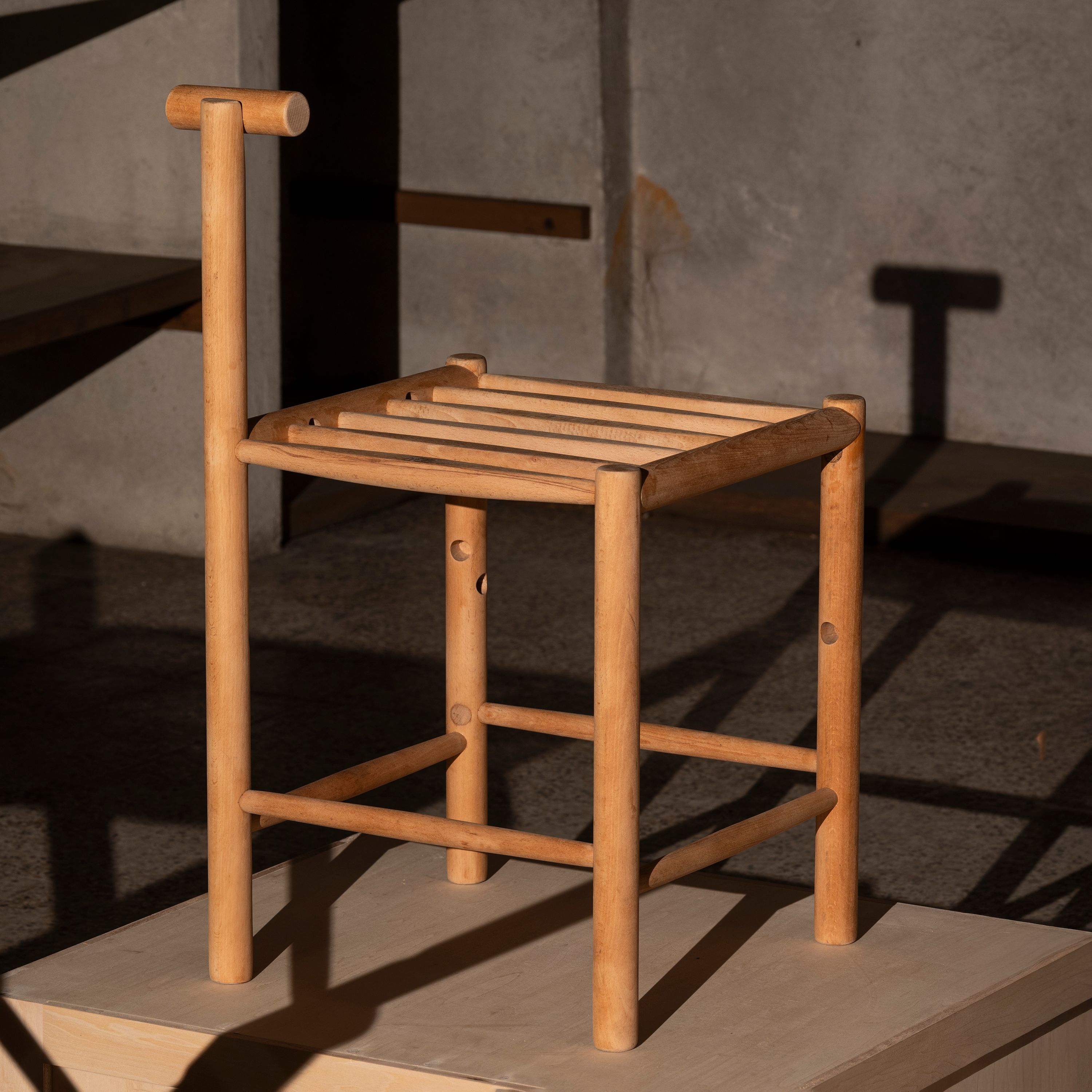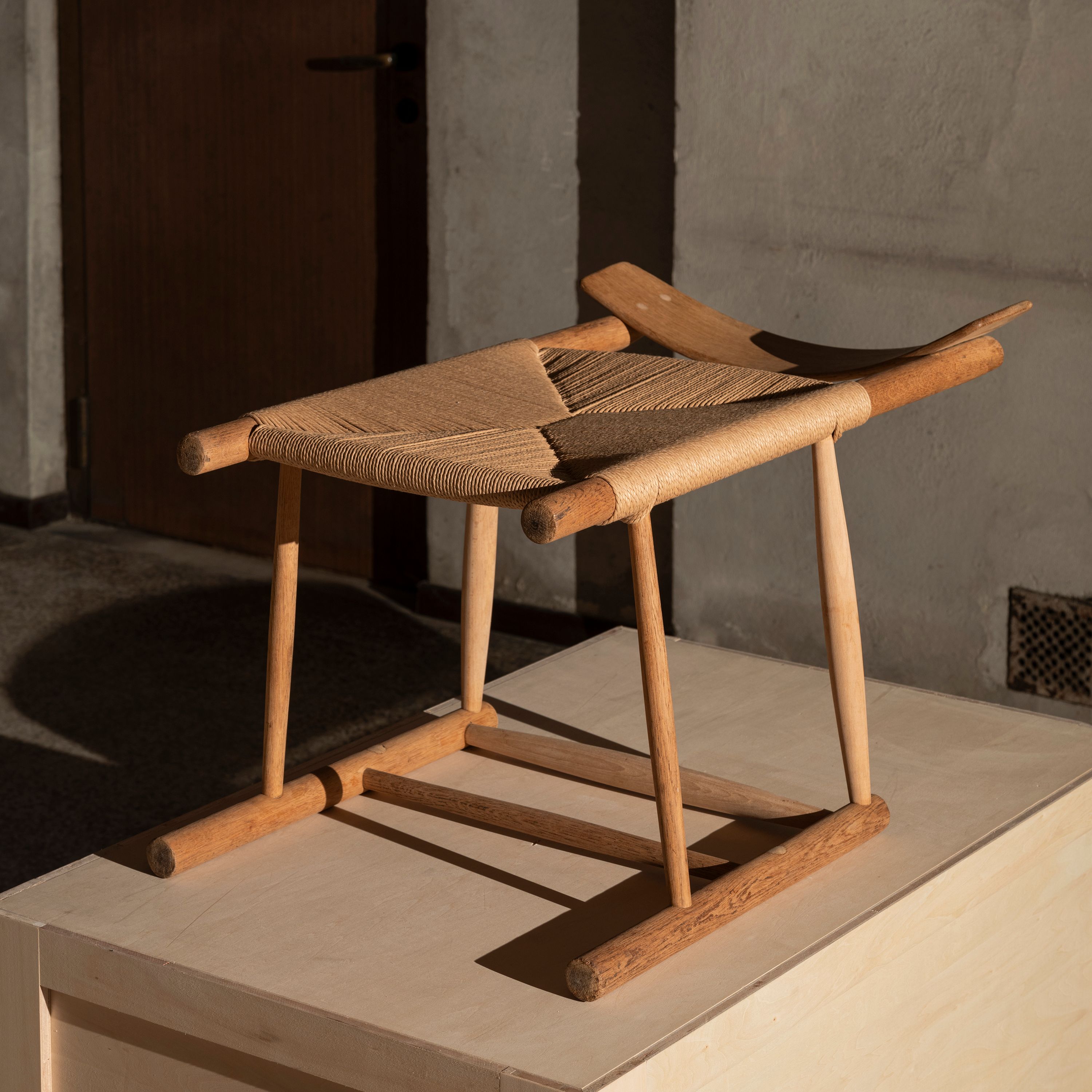
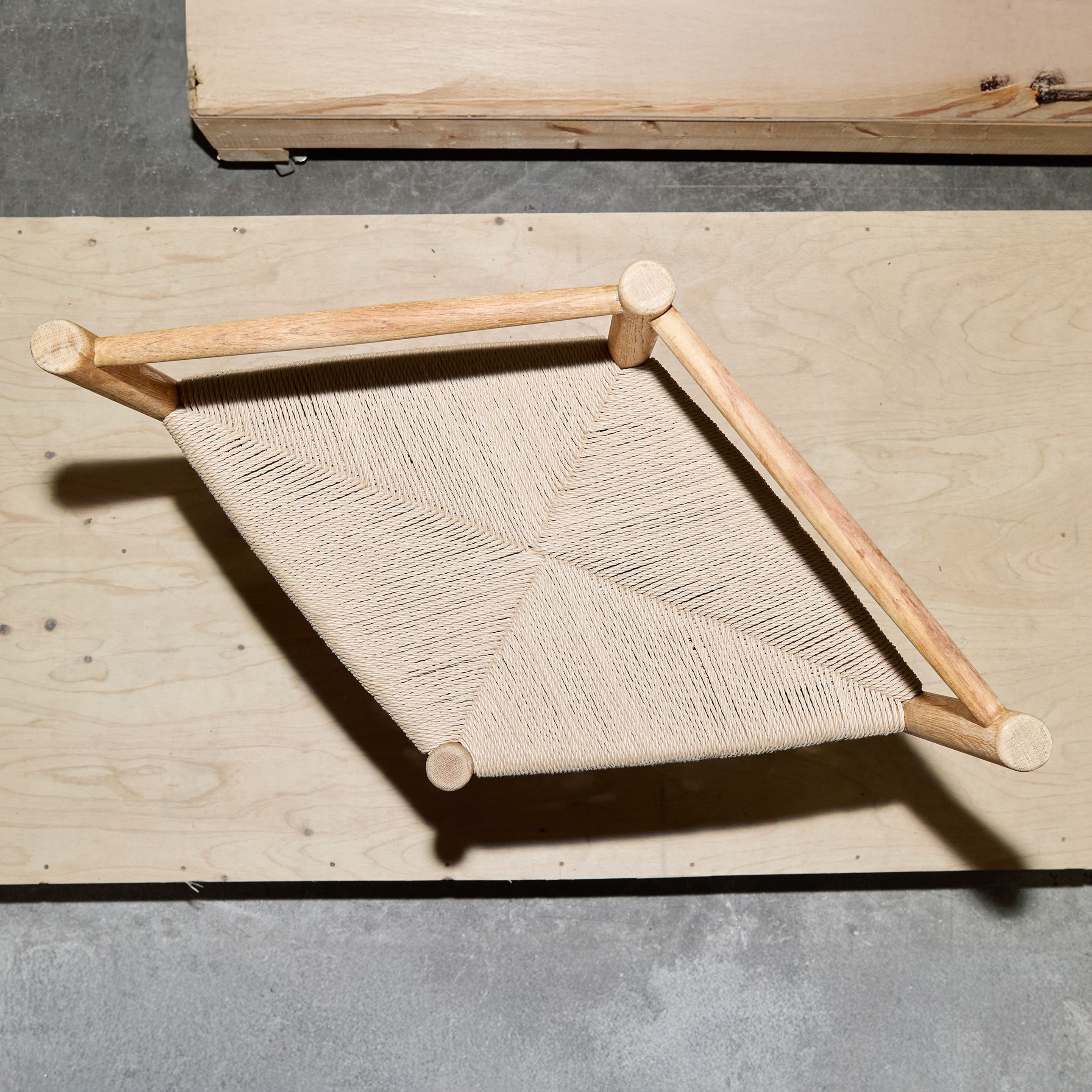
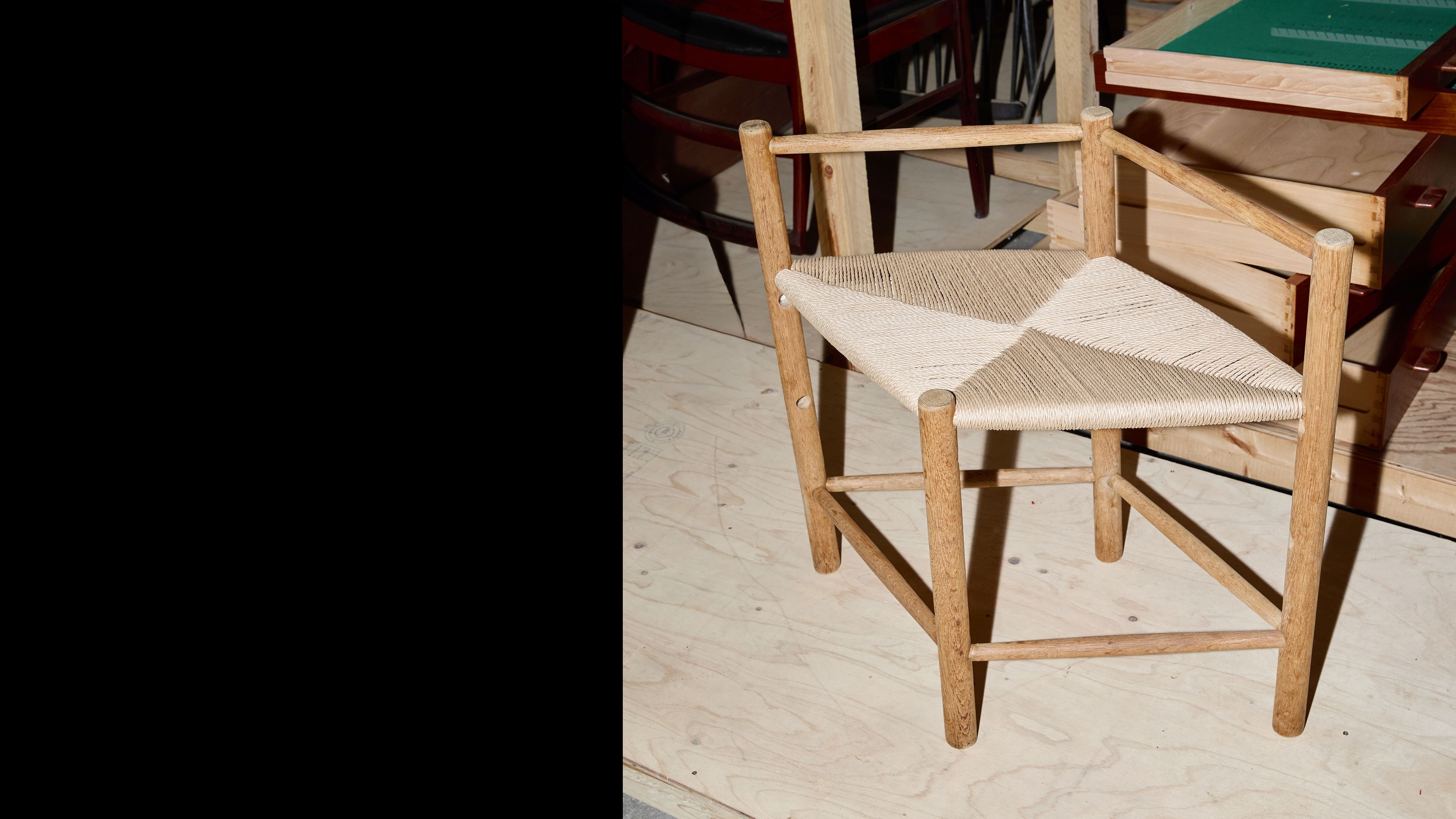
J39.5 Diagonal
Designer
AtMaDescription
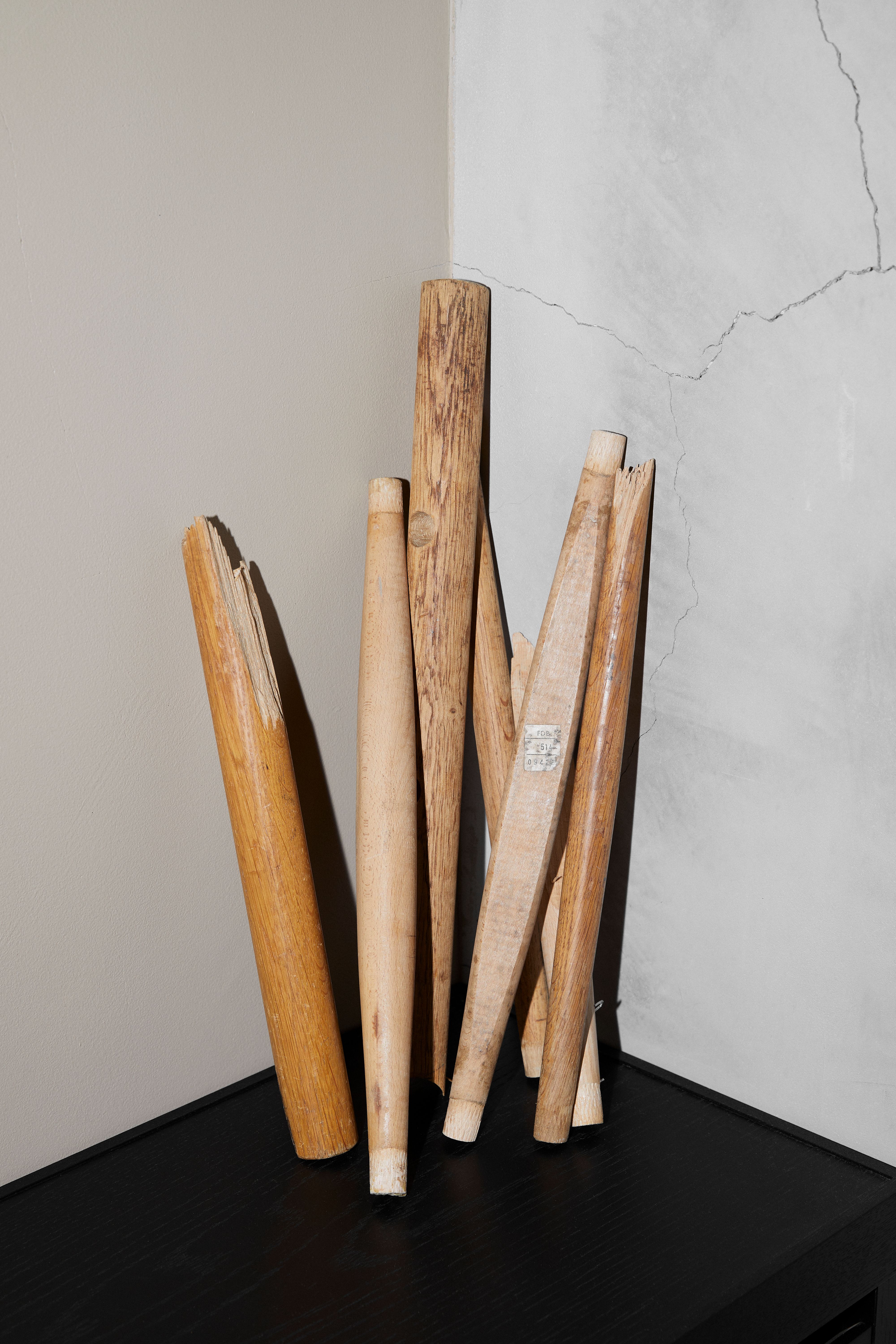
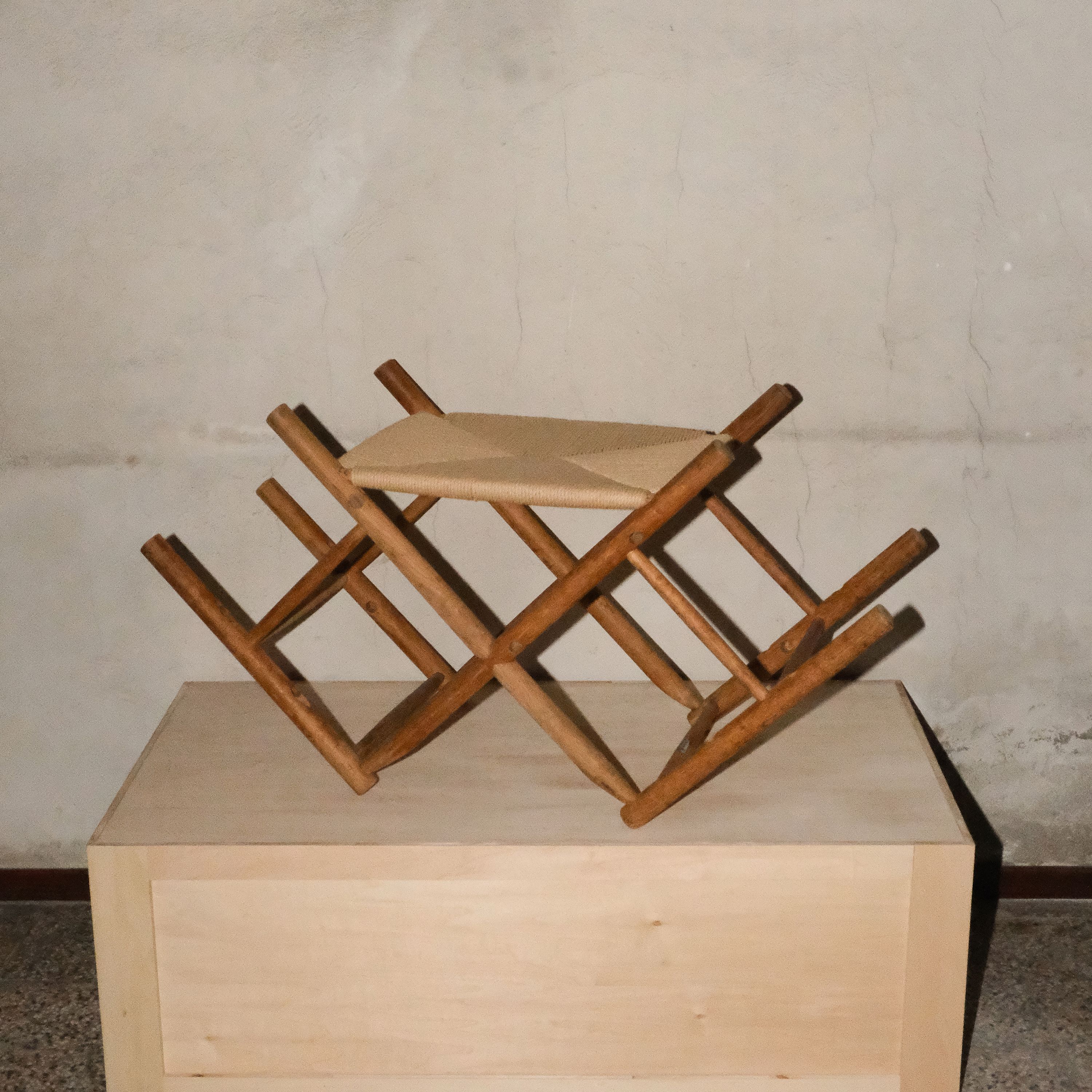
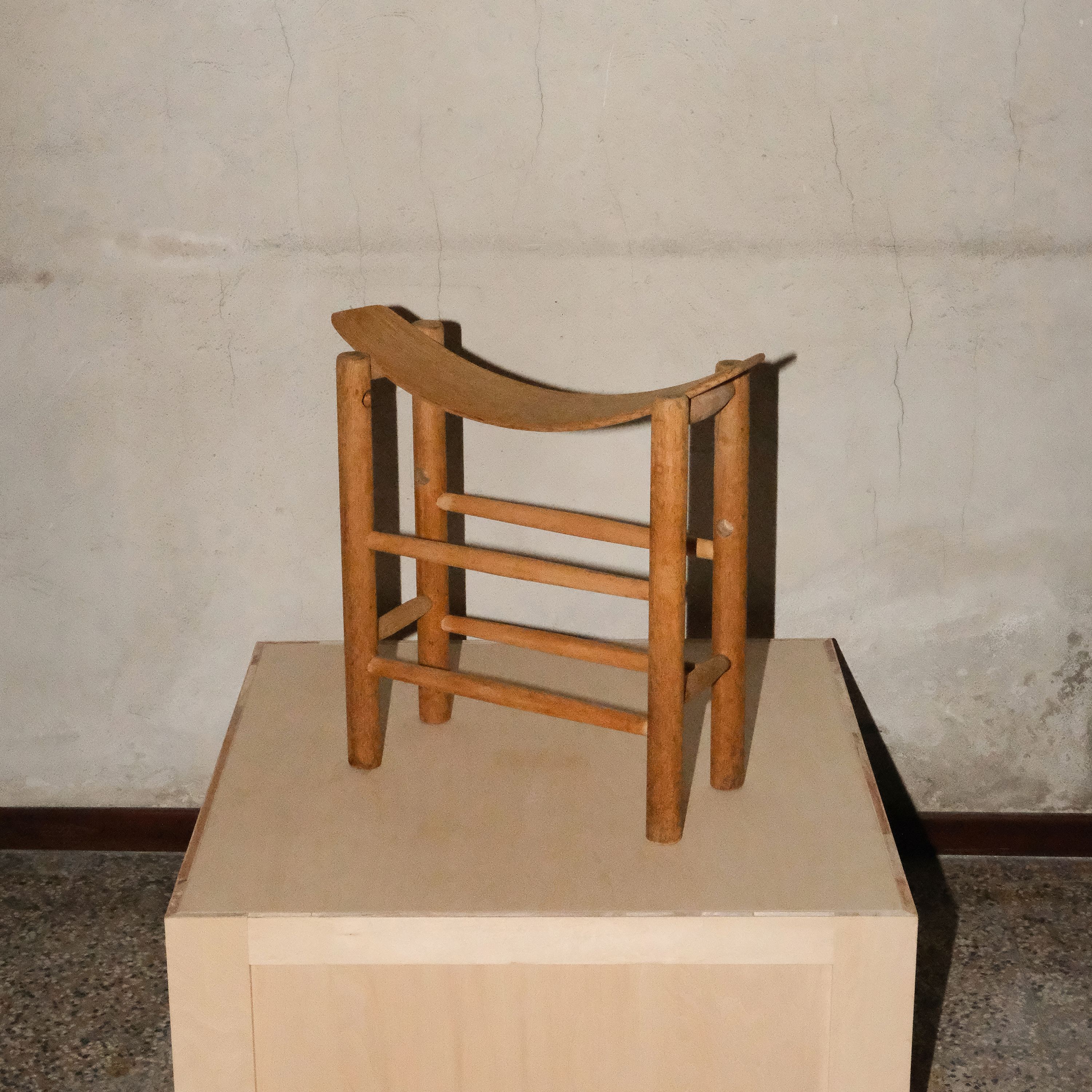
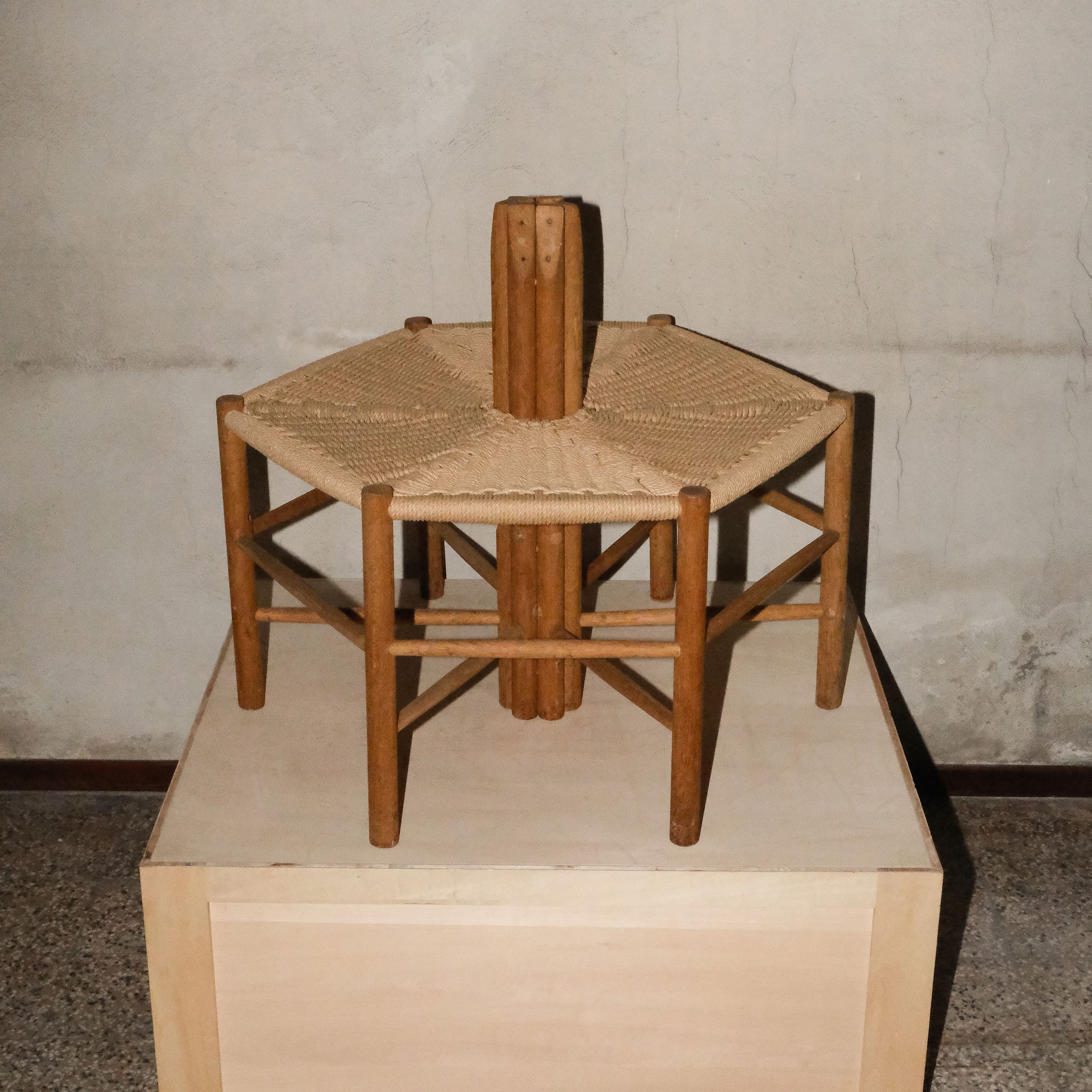
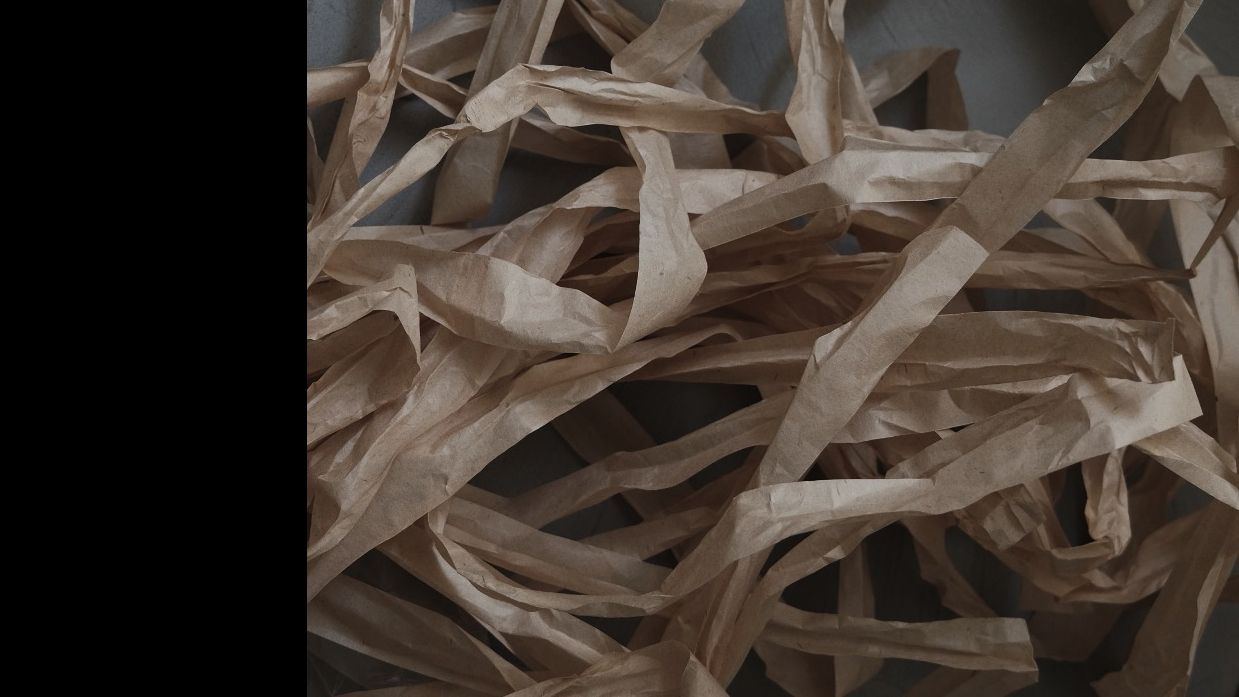
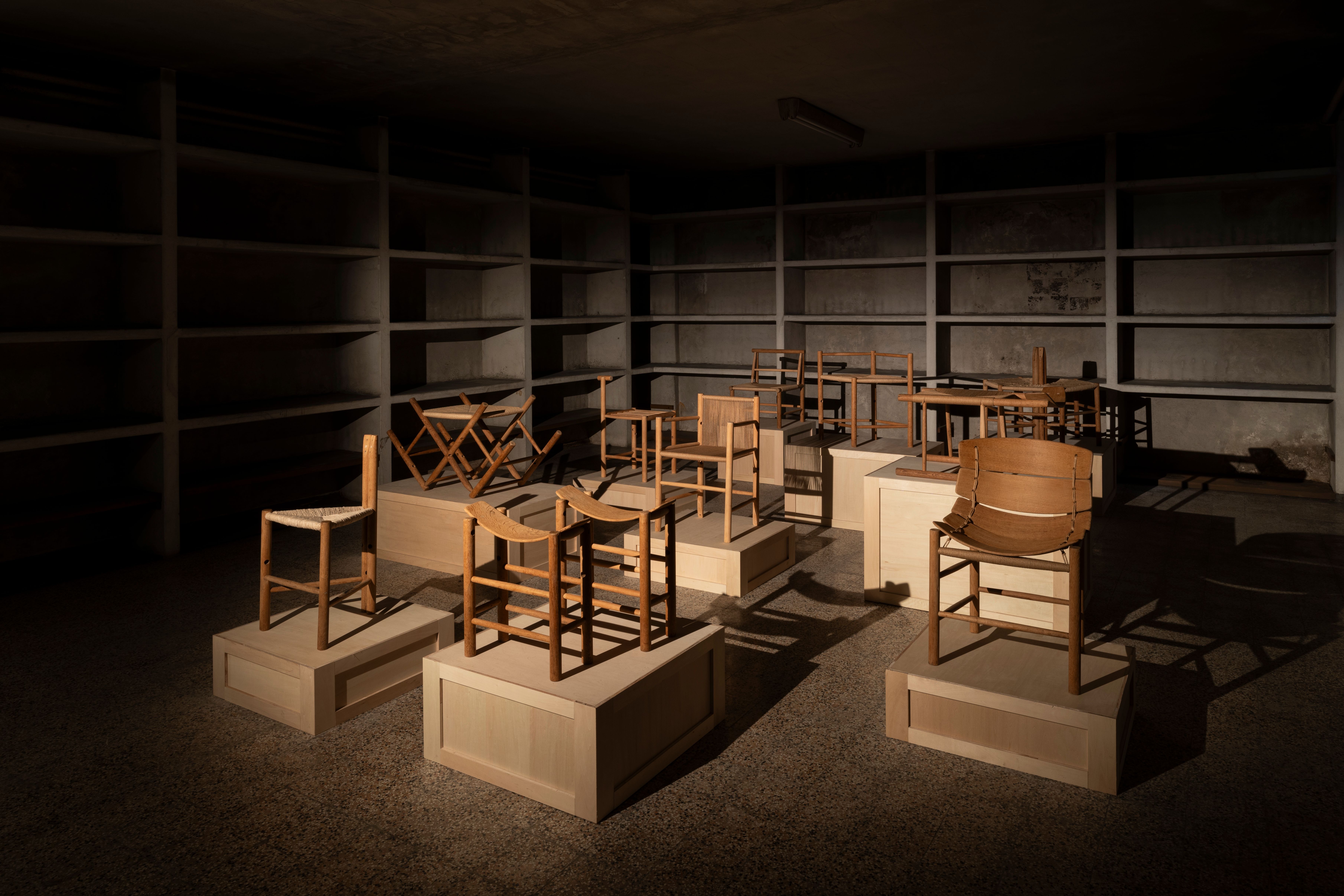
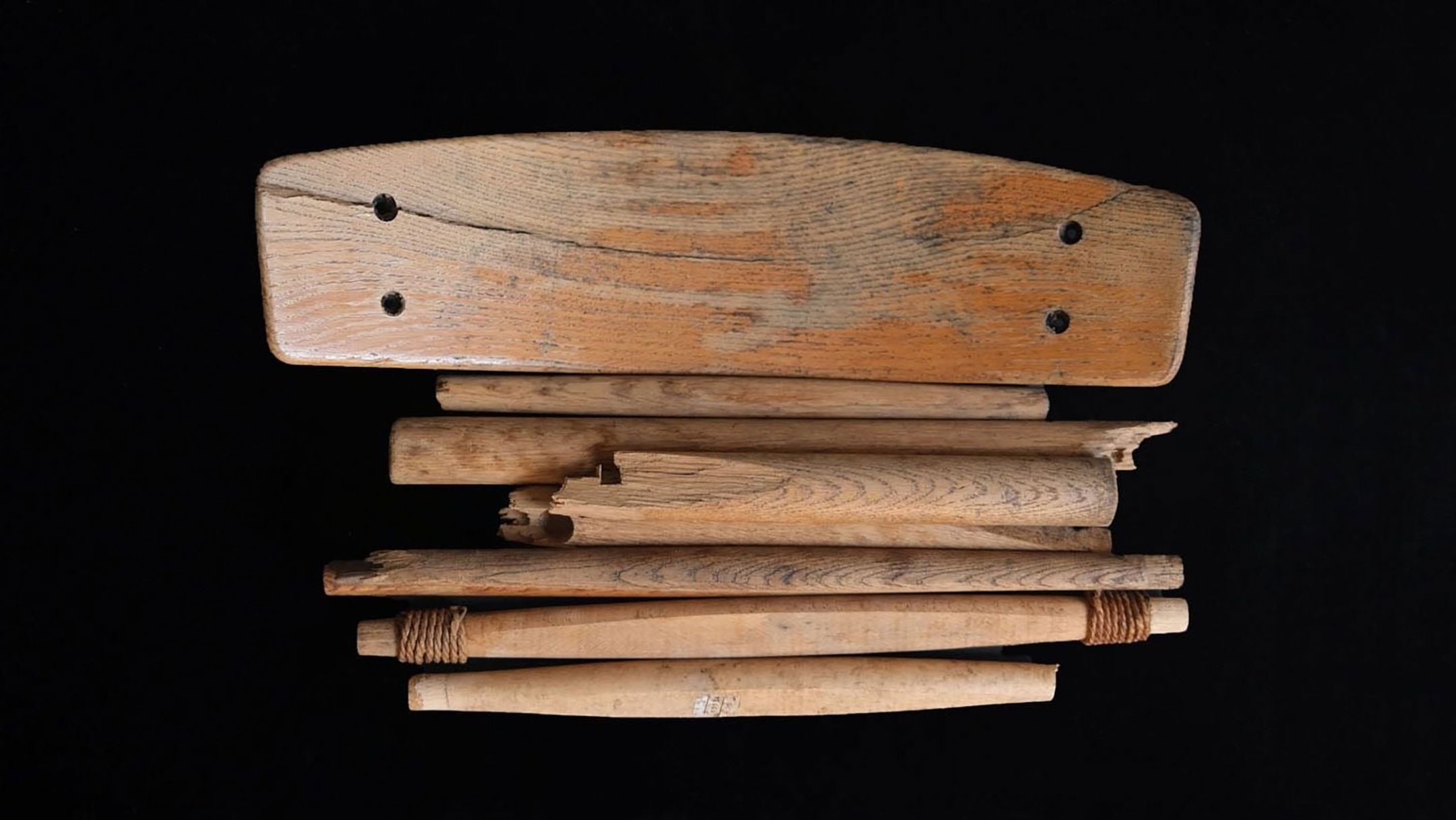
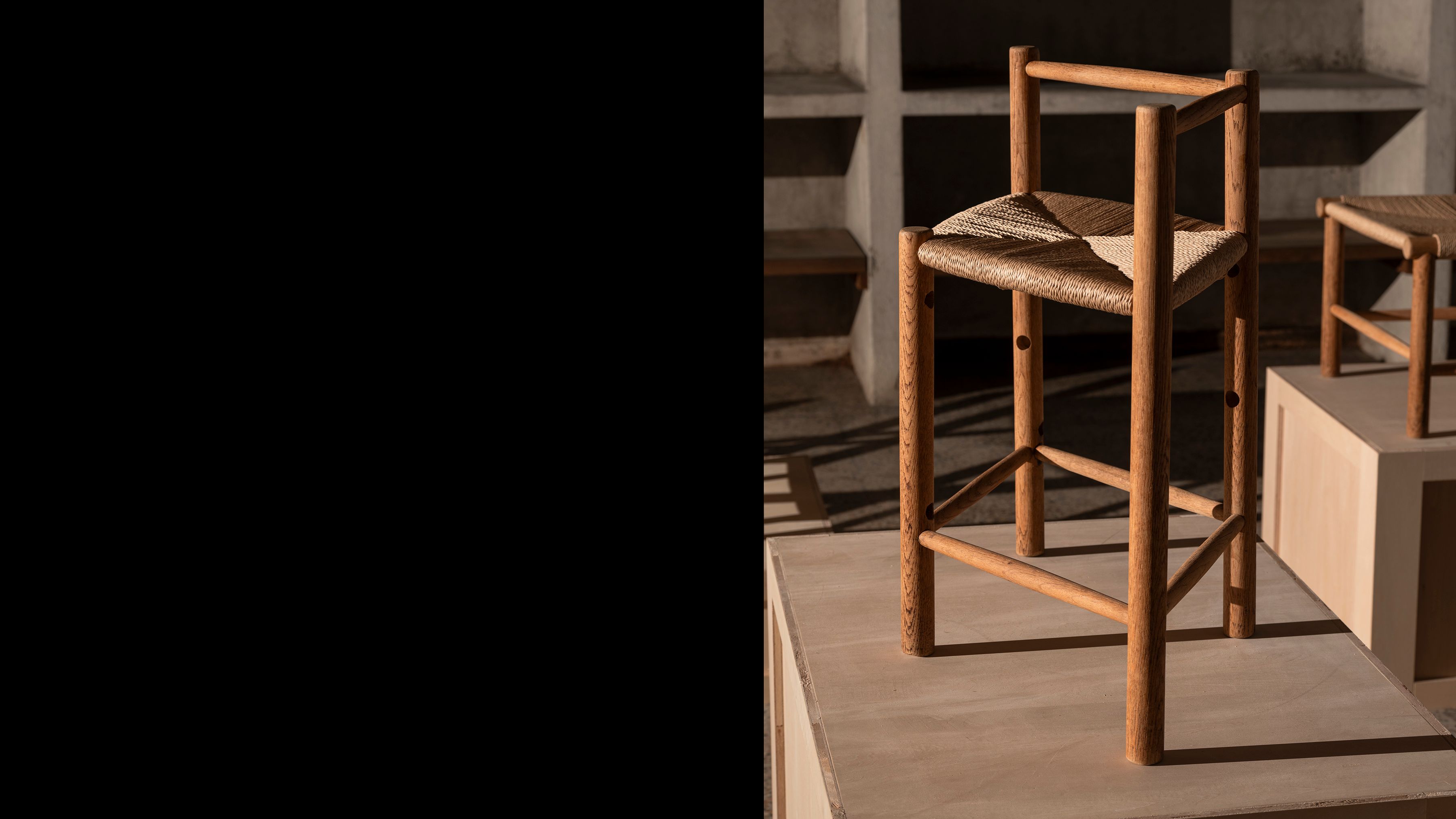
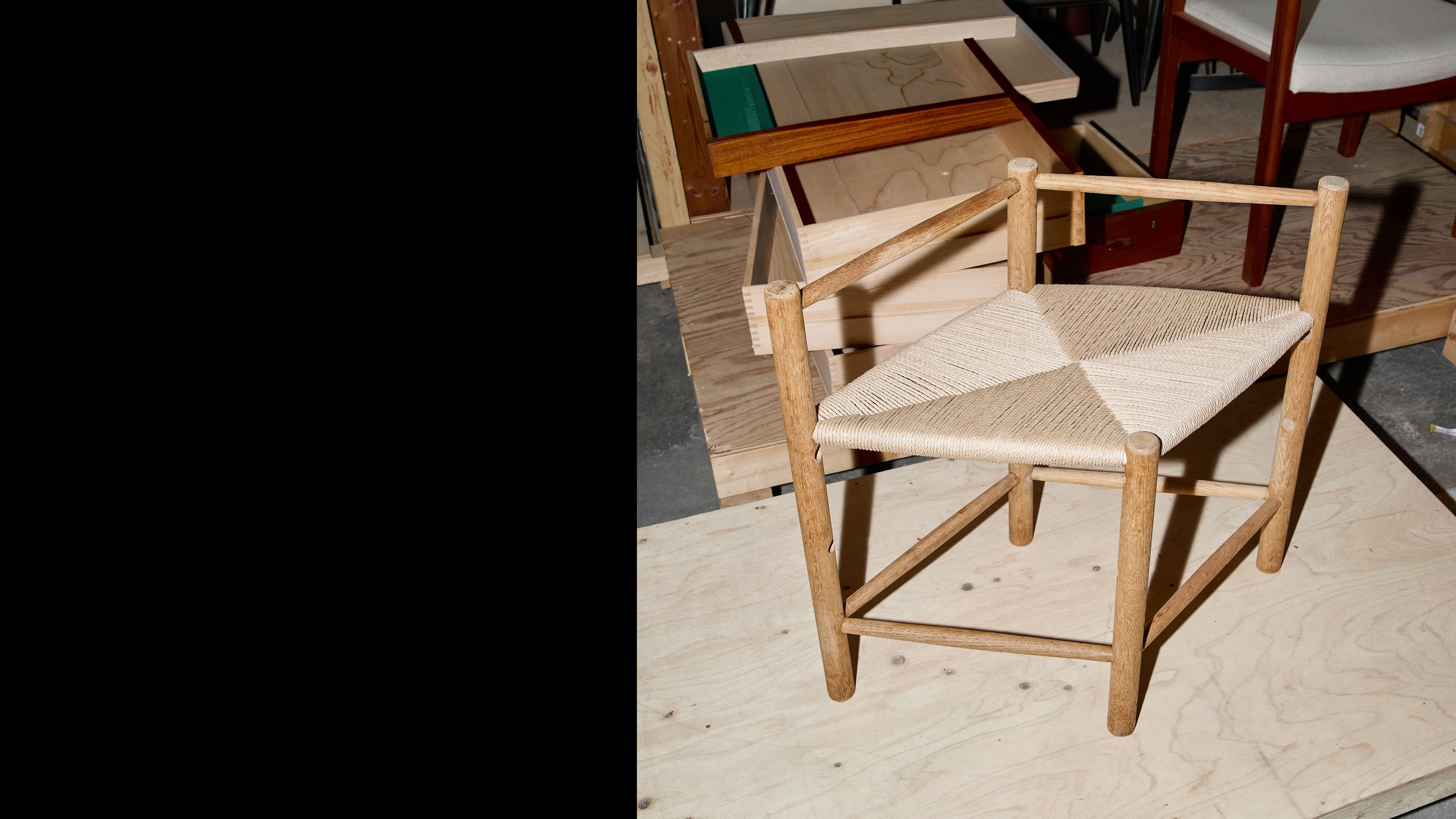
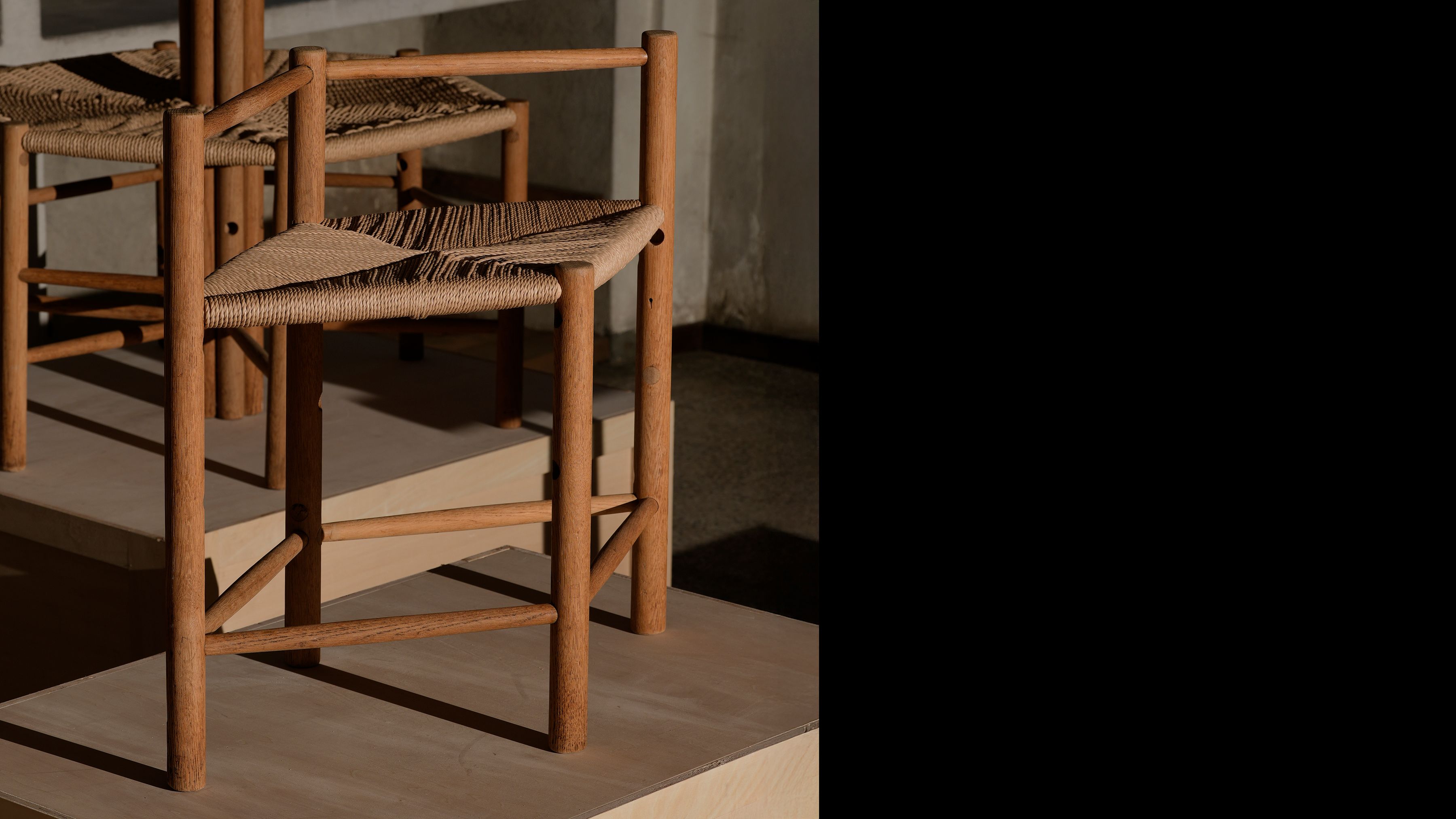
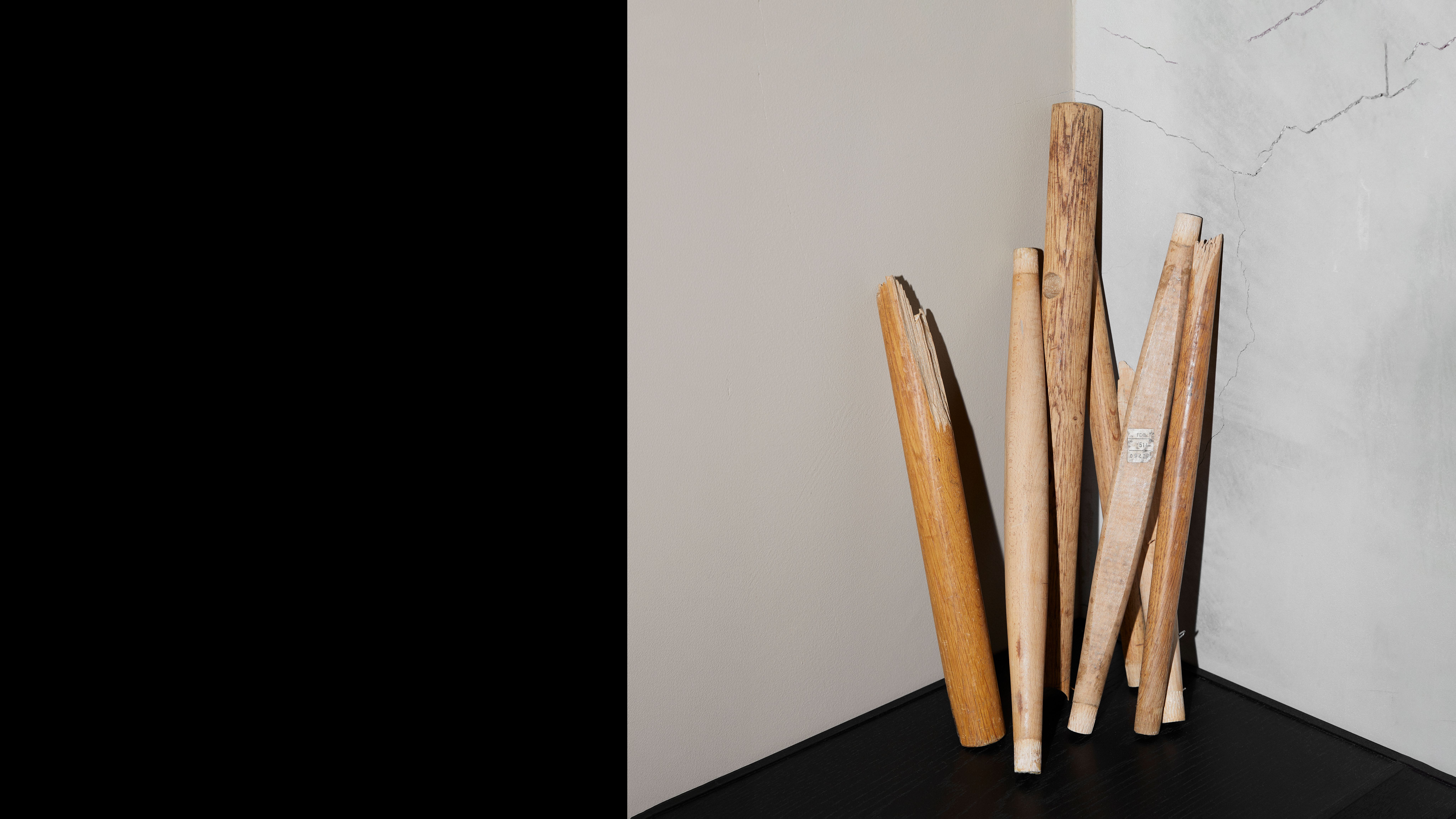
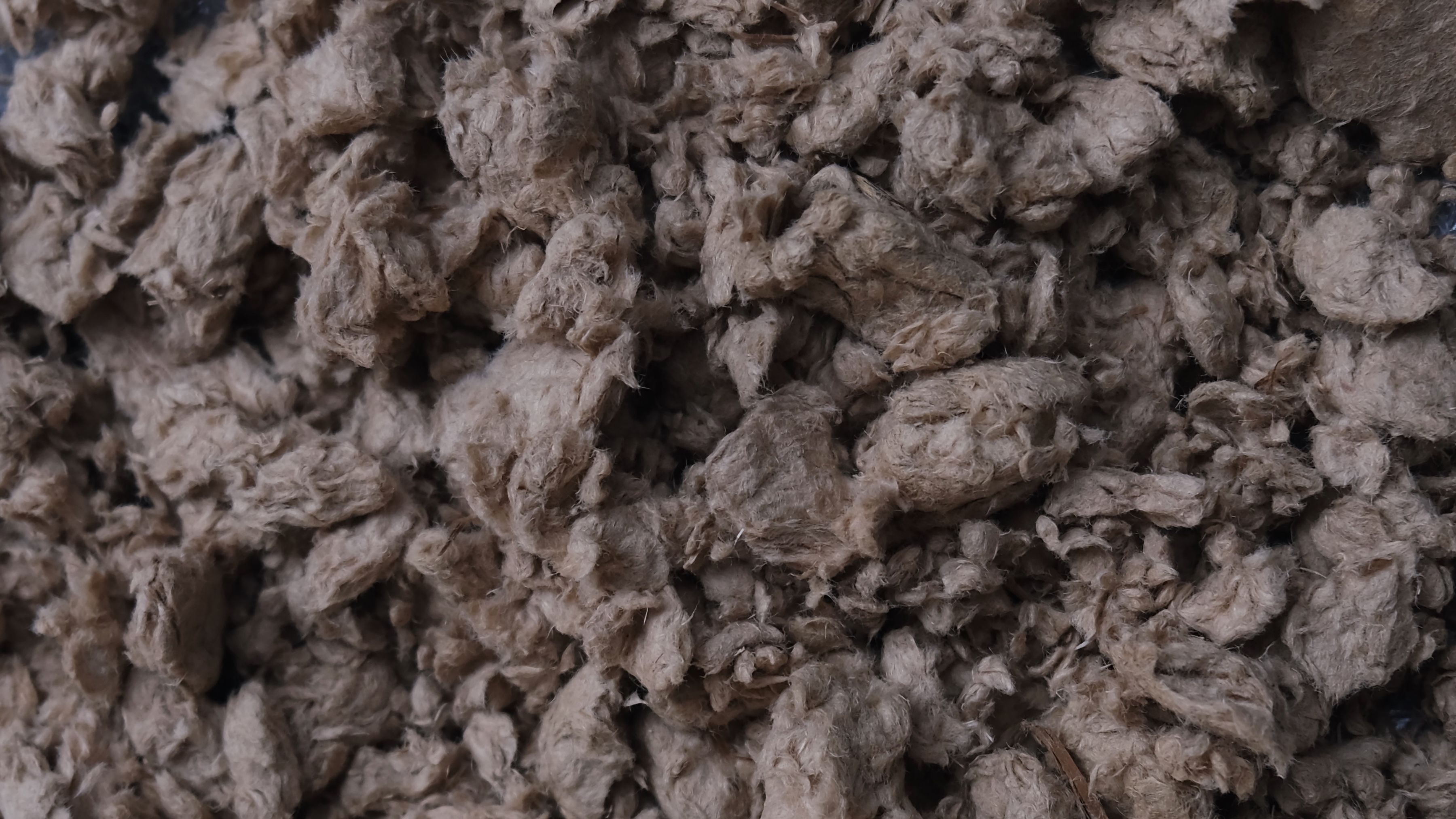
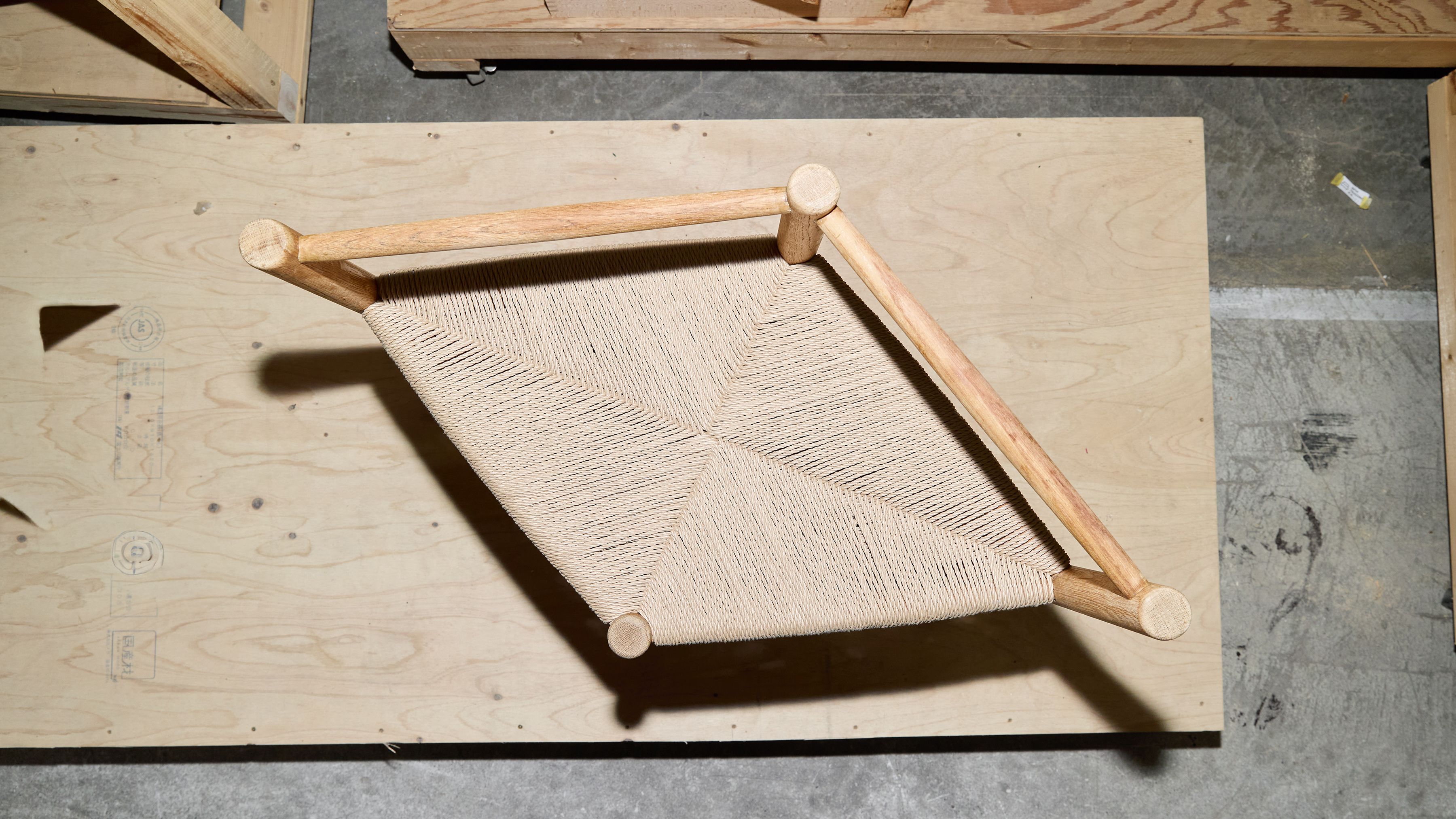
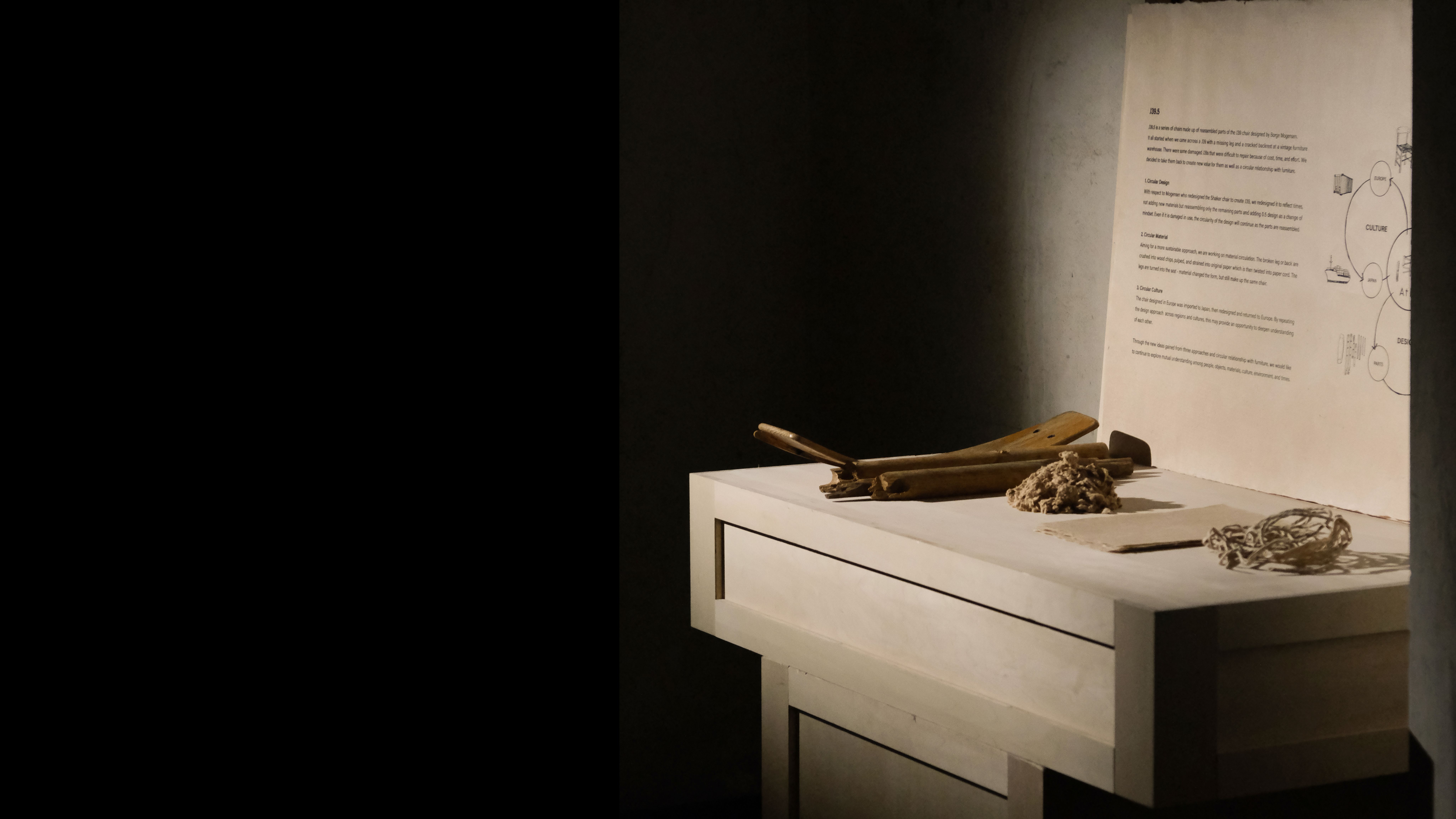
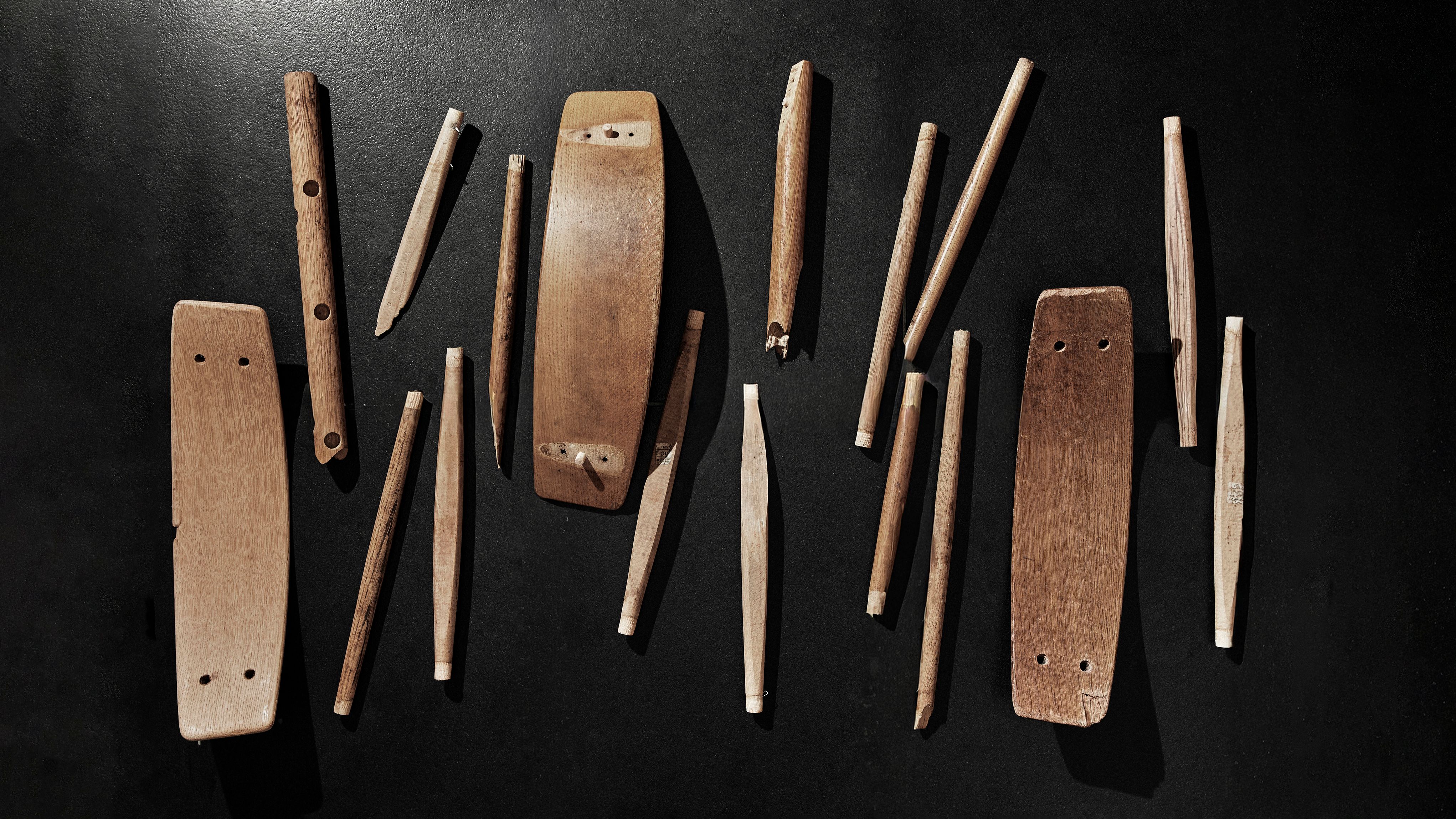
This chair is a unique piece from the small, yet open-ended, J39.5 series by Japanese design studio AtMa. Conceptual representations of a five-year research and development project by the Tokyo-based designers, the J39.5 chairs are playful reconfigurations of salvaged parts from Danish designer Børge Mogensen's iconic J39, the "People's Chair." What began with a single damaged J39 — found in a vintage warehouse, too significant to discard yet too costly to repair — became a continuing and immersive case study for the studio. AtMa creates one chair from the relic parts of a single J39, using only restored parts and meticulously upcycled materials, each a distinct configuration introducing hardly any new materials. Broken legs and backrests are crushed into powder, strained into paper, and twisted into cord for the seats, so that the chair's own legs may become the seat of its new iteration. Written in the spirit of a software update, the J39.5 title marks both a debt to the original chair and a small step beyond it — as design critic and curator Glenn Adamson put it: "As for J39.5, if it exemplifies the very best of contemporary design, as I, and a few relevant award juries, believe it does, what does it say about our moment? AtMa's impressive feat of reclamation may be understood against the backdrop of the climate emergency and all-but-unabated consumerism."
AtMa
AtMa
Founded in Tokyo in 2013 by artist Ayumi Koyama and interior designer Makoto Suzuki, AtMa is a multidisciplinary studio with projects including studio-led design case studies and commissioned work ranging from art installations to interior architecture. Across all areas and scales of expression, the practice seeks and proposes design solutions to social and environmental issues. Central to the studio's principle is the notion that a contemporary designer's task may not be to bring another chair or another table into the world but rather to revisit and upcycle the great designs handed down by their predecessors, a practice of thinking "beyond the new," to borrow a phrase from Hella Jongerius and Louise Schouwenberg.
That conviction is most fully realized in J39.5, an open-ended series built from broken examples of Børge Mogensen's J39 chair: pieces too appreciated to discard, too costly to repair. AtMa salvages their components down to the wood itself, pulping derelict parts into up-cycled paper cord in place of the handwoven sedge grass of the chair's earliest examples. The result is not restoration but reinvention, and the title reads like a software update — an honest study of, and an homage to, a design that AtMa considers both historical and quintessential.
Design critic and curator Glenn Adamson wrote: "[...] If Atma's J39.5 exemplifies the very best of contemporary design, as I, and a few prominent award juries, believe it does, what does it say about our moment? AtMa’s impressive feat of reclamation is to be understood against the backdrop of the climate emergency and all-but-unabated consumerism."
The same concern runs through the more recent SUR+PLUS series, presented at Alcova during Milan Design Week in April 2026, and their interior concept for the retailer Allu in Shinjuku, where materials are set without permanent fixing so they can later be removed and given yet another life.
AtMa describes their work with a simple formula: "minimum required material + a few percent" — a calculus of responsibility, meeting existing conditions while transcending them through a leap of imagination, a twist of insight, or a small surplus of joy.
AtMa
Founded in Tokyo in 2013 by artist Ayumi Koyama and interior designer Makoto Suzuki, AtMa is a multidisciplinary studio with projects including studio-led design case studies and commissioned work ranging from art installations to interior architecture. Across all areas and scales of expression, the practice seeks and proposes design solutions to social and environmental issues. Central to the studio's principle is the notion that a contemporary designer's task may not be to bring another chair or another table into the world but rather to revisit and upcycle the great designs handed down by their predecessors, a practice of thinking "beyond the new," to borrow a phrase from Hella Jongerius and Louise Schouwenberg.
That conviction is most fully realized in J39.5, an open-ended series built from broken examples of Børge Mogensen's J39 chair: pieces too appreciated to discard, too costly to repair. AtMa salvages their components down to the wood itself, pulping derelict parts into up-cycled paper cord in place of the handwoven sedge grass of the chair's earliest examples. The result is not restoration but reinvention, and the title reads like a software update — an honest study of, and an homage to, a design that AtMa considers both historical and quintessential.
Design critic and curator Glenn Adamson wrote: "[...] If Atma's J39.5 exemplifies the very best of contemporary design, as I, and a few prominent award juries, believe it does, what does it say about our moment? AtMa’s impressive feat of reclamation is to be understood against the backdrop of the climate emergency and all-but-unabated consumerism."
The same concern runs through the more recent SUR+PLUS series, presented at Alcova during Milan Design Week in April 2026, and their interior concept for the retailer Allu in Shinjuku, where materials are set without permanent fixing so they can later be removed and given yet another life.
AtMa describes their work with a simple formula: "minimum required material + a few percent" — a calculus of responsibility, meeting existing conditions while transcending them through a leap of imagination, a twist of insight, or a small surplus of joy.